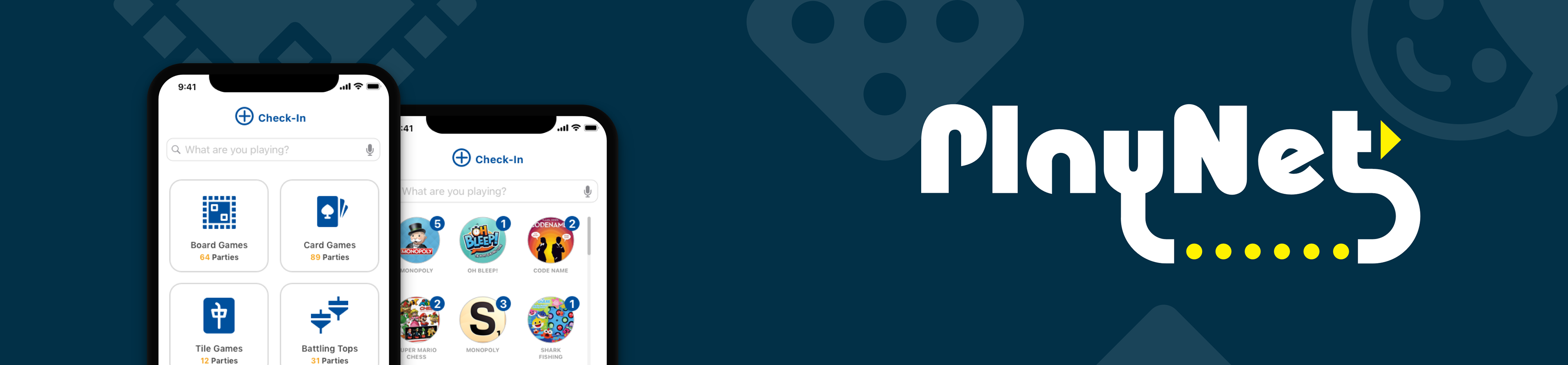
PLAYNET: The Gaming Platform
UI/UX Design
Role: UI/UX Designer
Duration: 1 month
Softwares: Sketch, Photoshop, Illustrator
Platform: iOS

Background
While digital gaming continues to grow in popularity, many people still enjoy in-person gaming experiences such as board games, trading card games, tabletop games, dice games, and battling tops. These activities offer unique social interactions that cannot be fully replicated online. However, one common challenge among enthusiasts is finding enough players to participate at the right time and place.
Many players own games and are eager to play, but their friends may be unavailable or their local gaming communities may be difficult to access. As a result, opportunities to enjoy these hobbies are often limited by the difficulty of finding compatible players.
Project Goal
Playnet is a platform designed to help people discover, connect with, and organize in-person gaming sessions within their local communities.
The platform enables users to create activities, browse available gaming sessions, and join events based on their interests, location, and availability. By reducing the friction involved in finding players, Playnet makes it easier for individuals to participate in the games they enjoy while building new social connections.
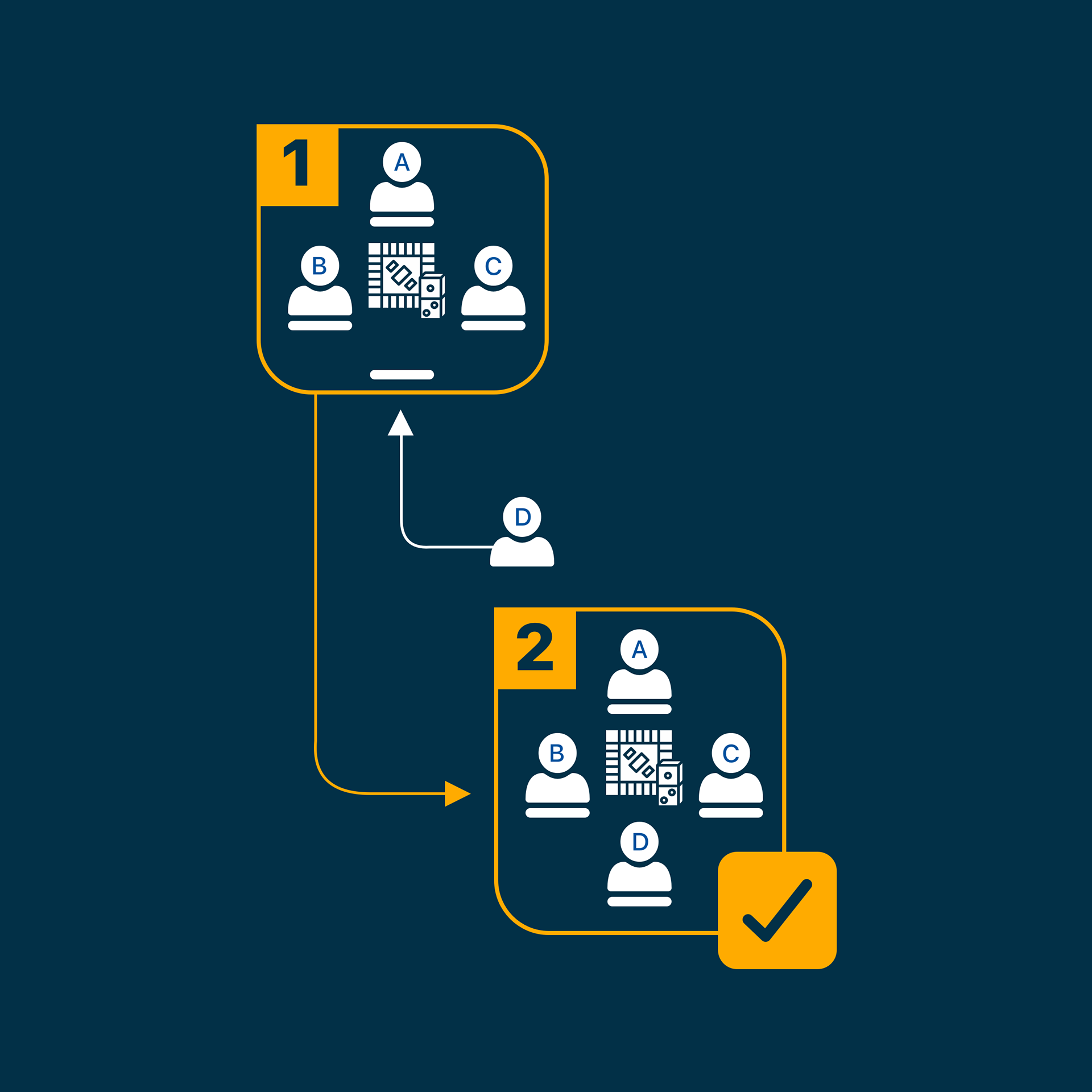
For example, a user hosting a board game session can create an event and specify the number of players needed. Other users interested in the same game can discover the event through Playnet and join the session, helping groups form more quickly and efficiently.
The goal of Playnet is to foster local gaming communities by connecting players, simplifying event organization, and creating more opportunities for meaningful face-to-face interactions through shared hobbies.

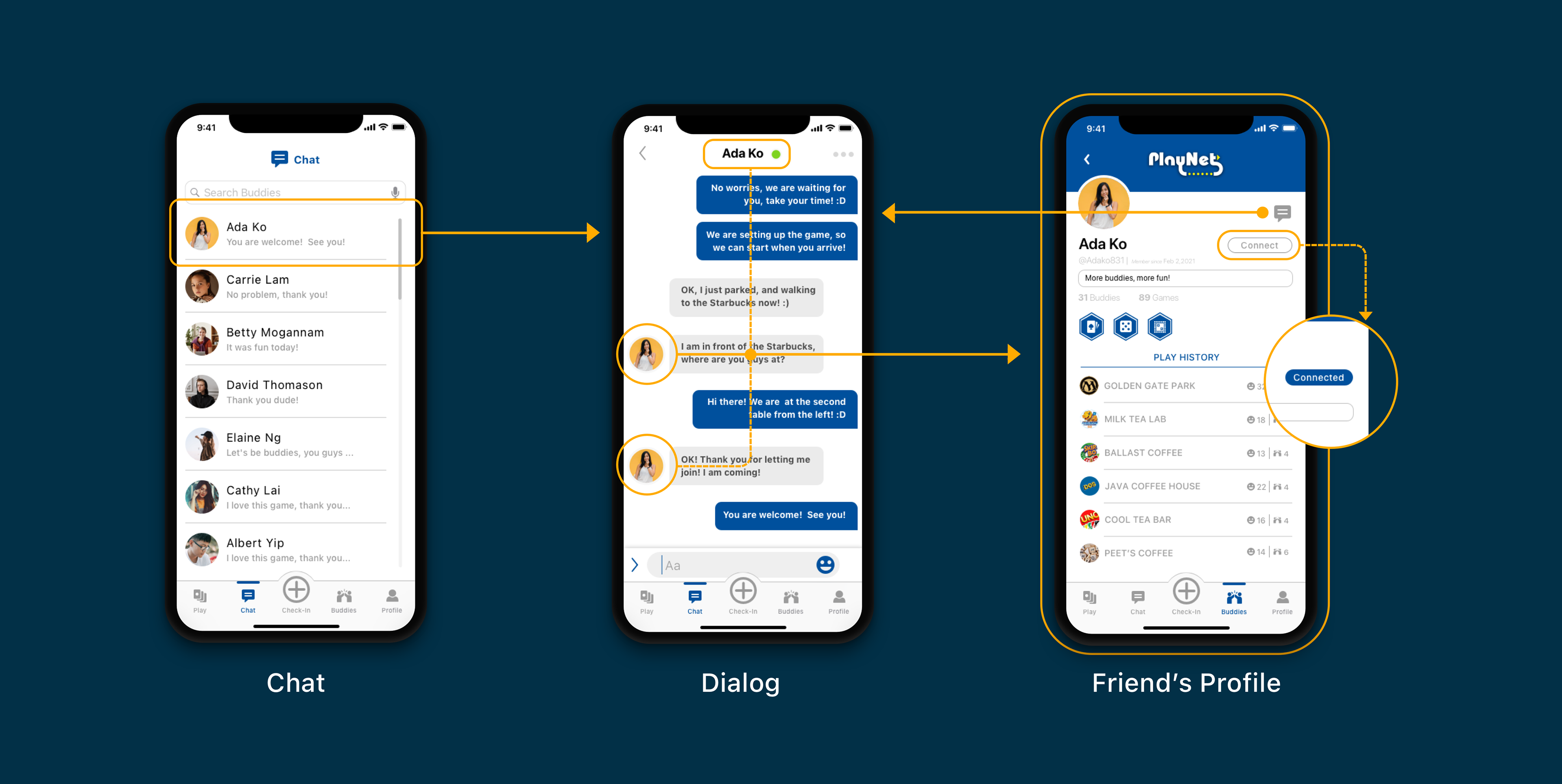
Profile & Buddies
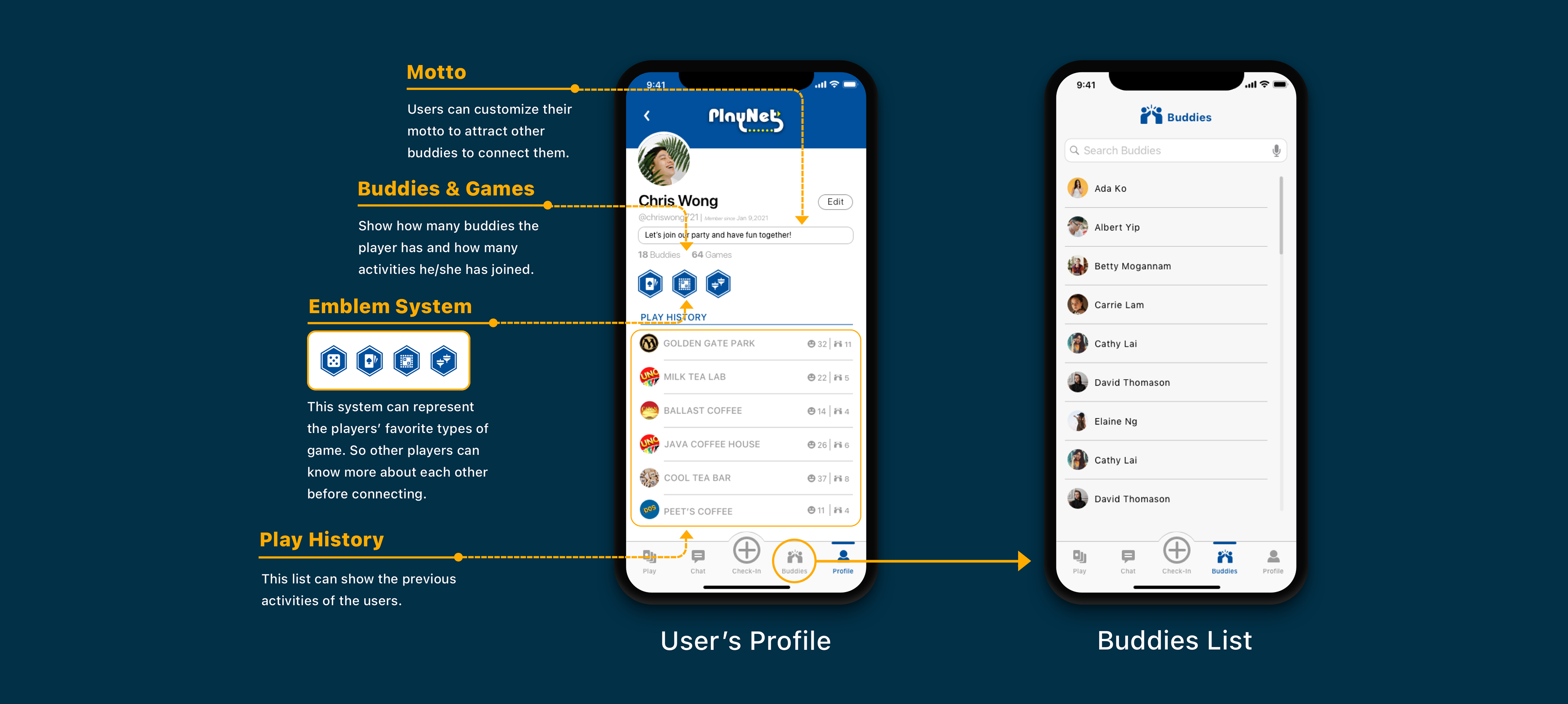
The Profile & Buddies feature helps users build and maintain connections within the Playnet community. Users can manage their profiles, view gaming interests, and add other players as buddies after participating in activities together.
By creating a network of trusted gaming companions, users can more easily organize future gaming sessions, stay connected with like-minded players, and reduce the effort required to find participants for new events. This feature strengthens community engagement and encourages long-term relationships built around shared gaming interests.
Chat
The Chat feature allows participants to communicate and coordinate before an activity takes place. Users can discuss event details, ask questions about the game, confirm meeting arrangements, and share relevant information. By improving communication and reducing uncertainty, the feature helps create a more seamless and enjoyable gaming experience.
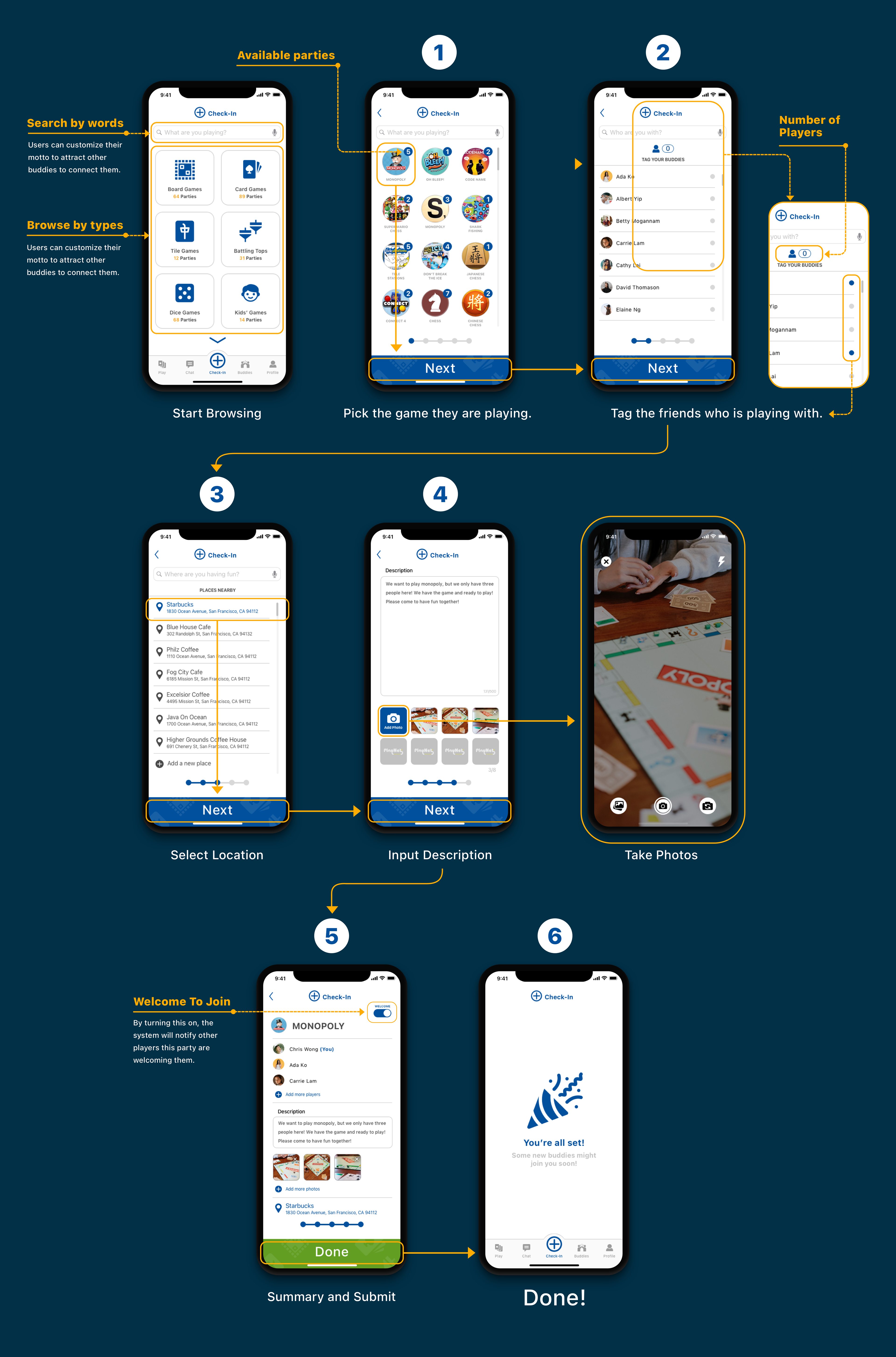
Check-In
The Check-In feature enables users to create and share gaming activities with the Playnet community. By posting event details such as the game, location, schedule, and participant requirements, hosts can quickly attract other players and form gaming groups.
This feature streamlines the process of organizing in-person gaming sessions while making it easier for players to discover and join activities that align with their interests.
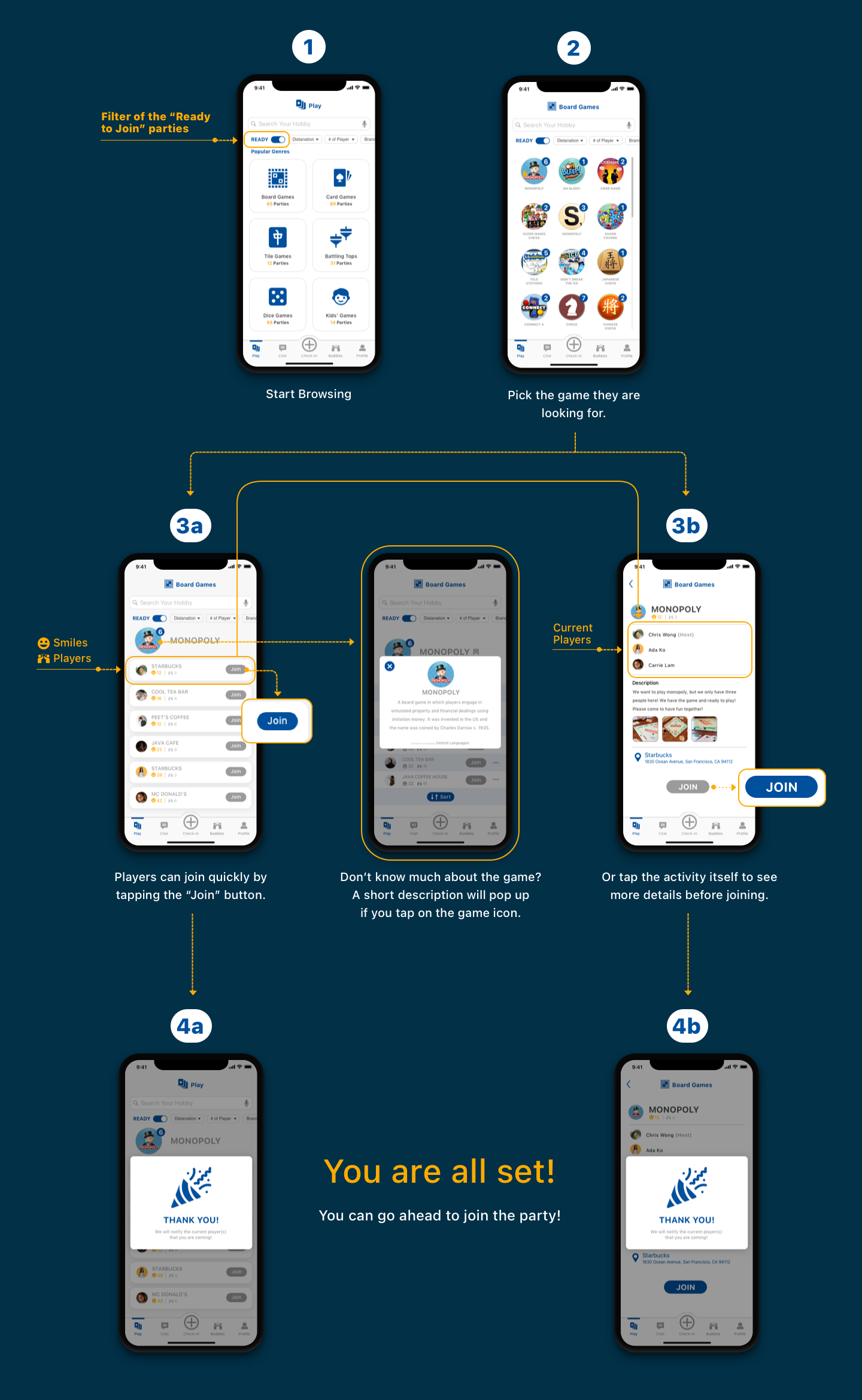
Explore & Play
The Explore & Play feature enables users to discover and join gaming activities within their local community. By browsing available events and connecting with other players, users can quickly find gaming sessions that match their interests and availability, making in-person gaming more accessible and enjoyable.

Primary Users
1) Board game enthusiasts looking for additional players.
2) Trading card game and tabletop gaming communities.
3) Students and young professionals seeking local social activities.
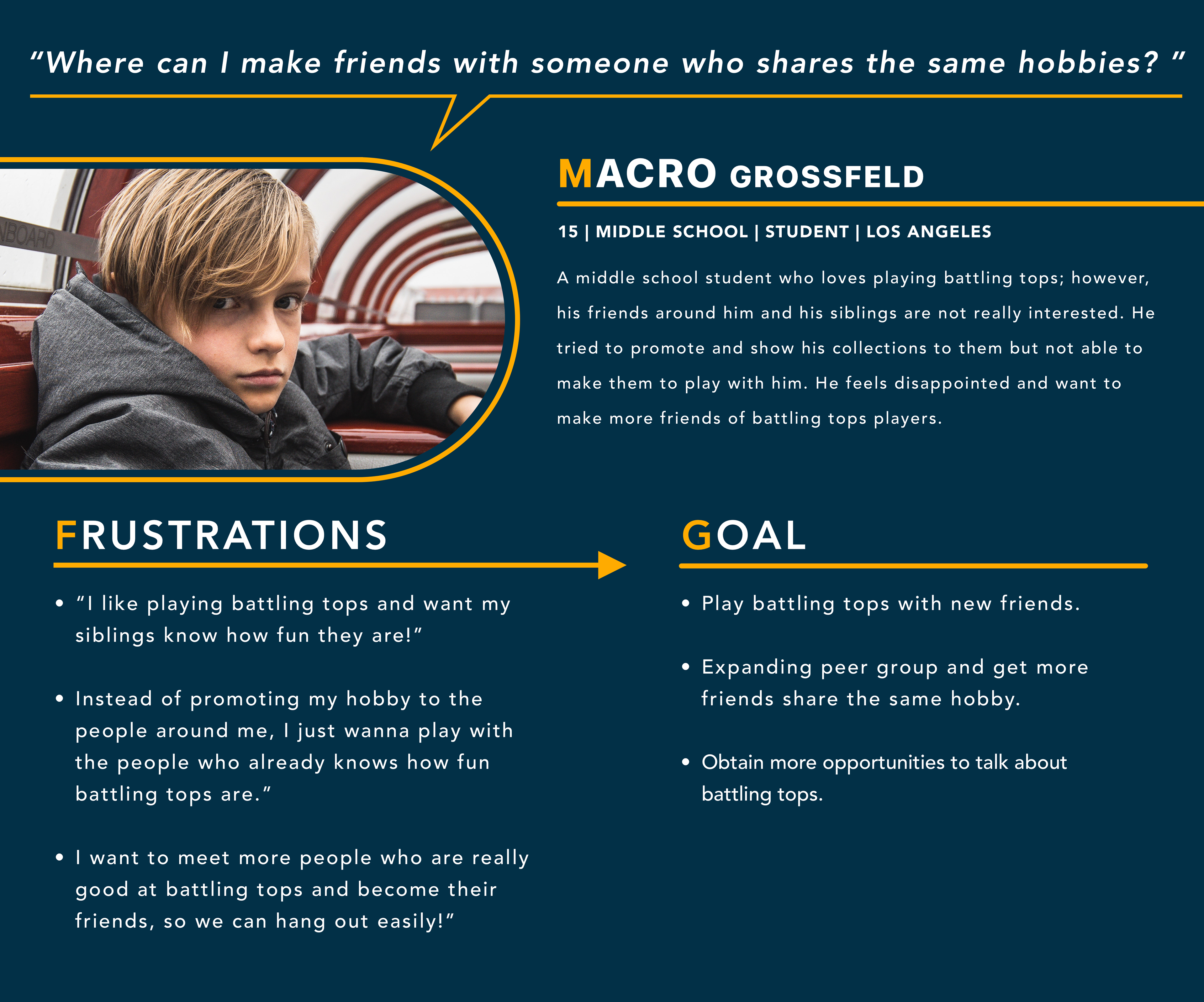
4) Individuals who want to meet new people through shared hobbies.
This demonstrates audience segmentation and product thinking, which hiring managers often look for in product design case studies.
Persona 1
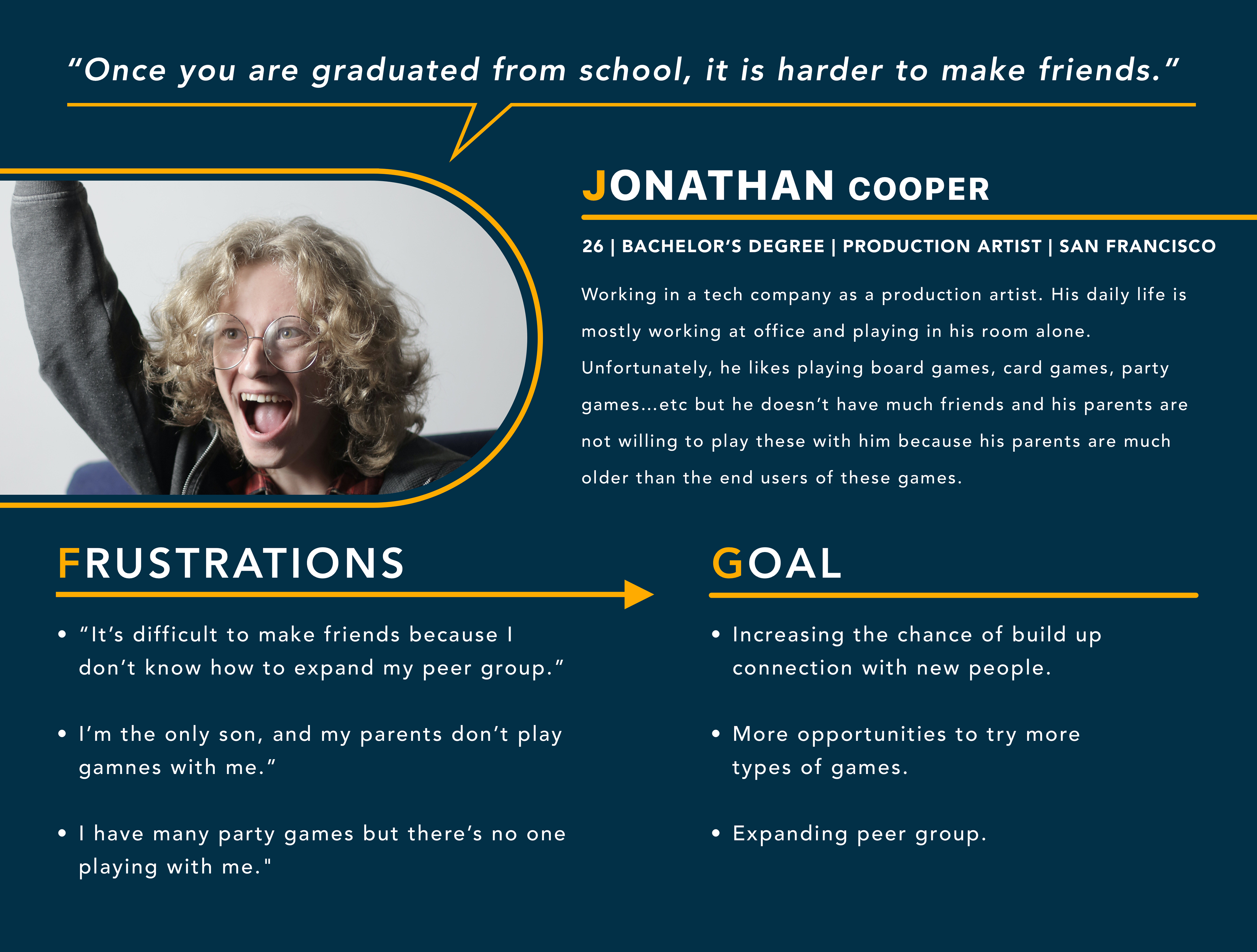
Persona 2

Challenges
One of the primary challenges in designing Playnet was creating a platform that could accommodate a wide variety of gaming communities while remaining simple and intuitive to use. Unlike platforms focused on a single game or hobby, Playnet needed to support diverse activities ranging from board games and trading card games to tabletop RPGs and other in-person gaming experiences.
Another challenge was balancing social networking features with event discovery and organization. Users needed an efficient way to find activities, connect with other players, communicate about events, and build long-term gaming relationships—all without creating an overly complex experience. This required careful consideration of information architecture, navigation, and feature prioritization.
Additionally, designing for trust and community was an important consideration. Since the platform encourages users to meet and interact in person, it was essential to create an experience that feels welcoming, transparent, and community-driven.
Reflection & What I Learned
This project reinforced the importance of designing around human connection rather than simply building features. While Playnet is ultimately a platform for finding and organizing gaming activities, the deeper user need is helping people build relationships through shared interests.
Throughout the design process, I learned how to approach community-focused products from both a user and product perspective. Features such as activity creation, event discovery, buddy connections, and chat functionality were not designed as isolated components, but as parts of a larger ecosystem that supports meaningful interactions between users.
I also gained valuable experience designing complex user flows that involve multiple touchpoints, including discovery, communication, event participation, and relationship building. This project challenged me to think beyond individual screens and focus on the complete end-to-end user journey.
Most importantly, I learned that successful community platforms are built on reducing barriers to participation. By making it easier for users to discover activities, connect with like-minded people, and organize events, design can play a meaningful role in helping people form real-world connections.
Additional Work
This case study focuses primarily on the product strategy, user experience, and problem-solving process behind Playnet. I have also created a separate page dedicated to the project's visual design, where I showcase the UI design system, branding, and interface details.
If you have a moment, I would love for you to explore it as well. Thank you for your time and consideration.